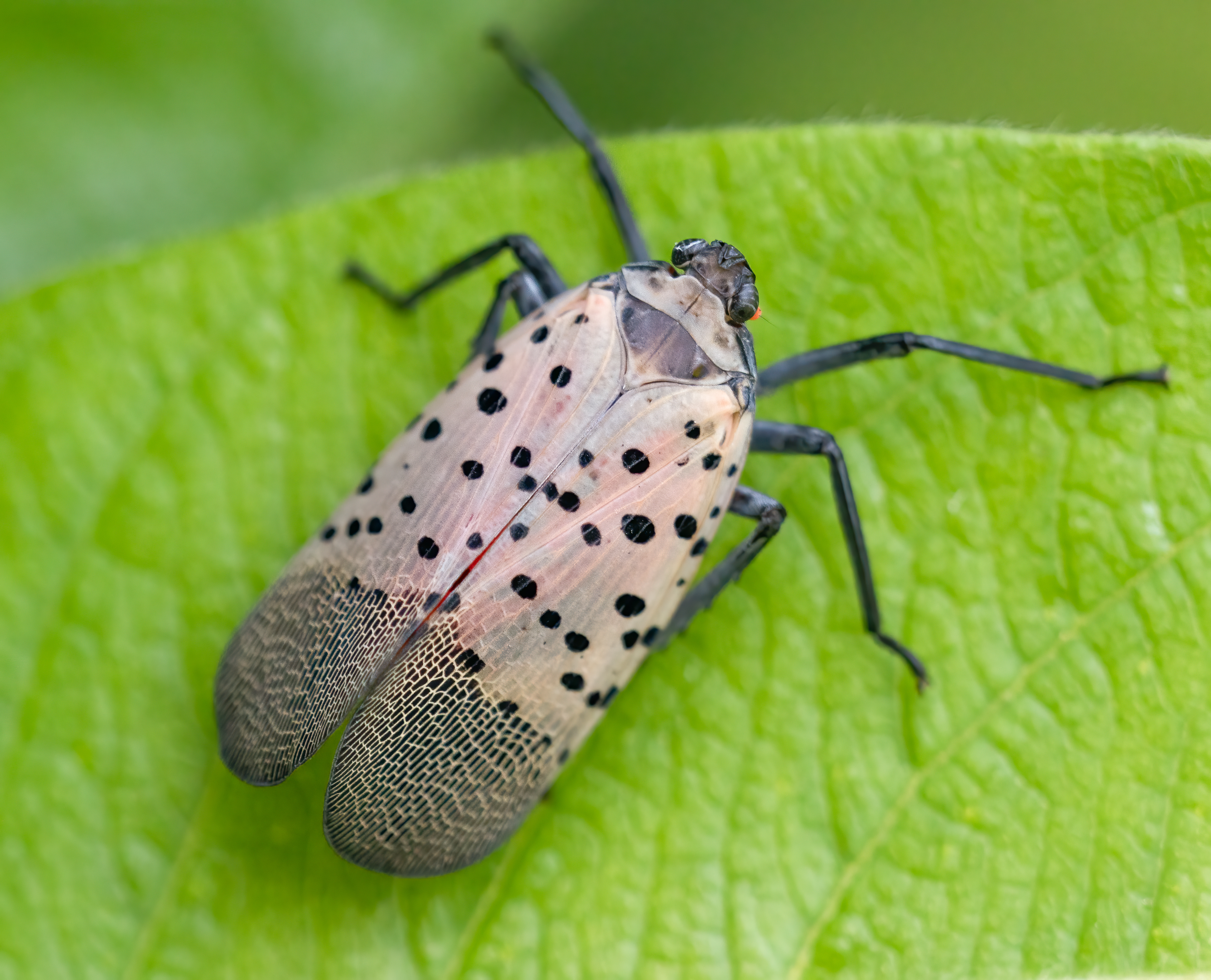
The spotted lanternfly, an invasive insect that feeds on grapes, cherries, peaches and apples, has been confirmed in Washtenaw County for the first time.
Matt DeJonge, community forester with the Washtenaw County Conservation District, said the pest had been spreading through Wayne County for the past two years before reaching Washtenaw. The Michigan Department of Agriculture and Rural Development (MDARD) first publicly listed Washtenaw among the state's confirmed counties in a Sept. 10 press release announcing a separate detection in Berrien County. DeJonge discussed the confirmation, which was recorded through MDARD's invasive species tracker and verified with a photo and geolocation, in a WEMU interview that aired Wednesday, Sept. 23.
DeJonge said the confirmation had been, in his opinion, "a matter of time" given the rising number of sightings in Wayne County.
The timing is significant. Adult spotted lanternflies are active through October, and females lay egg masses that persist from September through May. Residents who know what to look for can help slow the spread.
What to look for
Adult spotted lanternflies are about 1 inch long. With wings folded, they appear gray or brown with black spots. With wings open, they flash yellow, black and red, according to MDARD.
Egg masses are about 1.5 inches long and resemble old chewing gum with a gray, waxy coating. They show up on trees, vehicles, shipping pallets, large boulders and landscaping rocks. DeJonge called landscaping rocks "a confirmed problem" for egg-laying.
The insect's primary host is the tree of heaven, itself an invasive species that has been in Michigan for more than a century. DeJonge described it as having a compound leaf with many small leaflets and said it is easily searchable online.
What to do
If you find an egg mass, scrape it off in place and report the sighting through the Michigan Invasive Species Network reporting page. The Washtenaw County Conservation District also recommends the citizen-science apps TreeSnap and iNaturalist for tracking invasive and native species.
DeJonge recommended homeowners rake leaves directly around trees this fall to interrupt fungal disease cycles, avoid moving firewood and consider removing tree of heaven by manual pulling or herbicide treatment.
The spotted lanternfly was first detected in the United States in 2014 in Pennsylvania and eached Michigan in 2022, according to MDARD. Its arrival raised particular concern for Michigan agriculture because of the range of crops it threatens.
Residents with tree health concerns can contact the Washtenaw County Conservation District at 705 N. Zeeb Road in Ann Arbor or by phone at (734) 302-8714.